
Sell two watches for $9,500 apiece and most dealers would call that an even week. It isn't. One of those sales might have paid you twice what the other did, and sale price alone would never tell you which.
Margin per reference is the number that would. It's the one figure that says, plainly, which watches actually earned their keep and which ones just looked like they did because the sticker price was high.
Sale Price Is Vanity. Margin Is the Truth.
Sale price tells you what a buyer paid. It says nothing about what the watch cost you. Two references can sell for identical amounts and land in completely different places once you subtract cost basis, because cost basis, not sale price, is what you actually risked to own the watch.
Here's what that looks like on paper. Both references below sold for the same $9,500. What differs is what each one cost to acquire:
| Reference A | Reference B | |
|---|---|---|
| Sale price | $9,500 | $9,500 |
| Cost basis (what you paid) | $6,800 | $5,200 |
| Gross margin (dollars) | $2,700 | $4,300 |
| Gross margin, as a percent of cost | 39.7% | 82.7% |
Same sale. Same revenue line on a spreadsheet. Reference B made you $1,600 more, and its margin as a percent of what you had at risk is more than double Reference A's. If you only look at sale price, both of these read as identical wins. They aren't close.
Gross Margin Is the Start, Not the Whole Answer
The table above is gross margin: sale price minus cost basis. It's the right first cut, and it's also not the final number, because it doesn't account for what the channel takes.
eBay's fees are tiered and Chrono24's commission is tiered too, which means the same gross margin can turn into two different net numbers depending on where the watch sold and at what price point. A dealer who ranks references by gross margin alone can still misjudge which one actually paid the most, because the channel took a bigger bite out of one of them. Run the actual sale price through the eBay fee calculator or the Chrono24 fee calculator before you trust a gross number for a real pricing decision.
Why It Has to Be Per Reference, Not Blended
Most dealers do track margin, just not at this resolution. They look at overall margin for the month or the quarter: total profit divided by total revenue. That number is fine for a P&L. It's useless for deciding what to buy next, because it hides exactly the gap the table above shows.
Blended margin can look healthy while a chunk of your inventory quietly loses money, propped up by a few references that are actually carrying the business. You can't see which is which from a blended number. You can only see it by asking the question of every watch, individually: what did this specific reference actually make you, after what you paid for it.
This is the same discipline behind capital tied up and days-to-sell. None of the three numbers mean much blended across your whole safe. All three earn their keep only when you look at them per watch.
Margin and Velocity Answer Different Questions
The days-to-sell piece argued that velocity usually matters more than margin on any single watch, because how fast your capital cycles compounds over a year in a way one good margin doesn't. That's still true, and it's not the whole picture.
Velocity tells you whether your capital is moving. Margin per reference tells you where to point it once it is. A dealer with fast turns and thin margins is busy. A dealer who knows which references turn fast and pay well is the one deciding what to buy next instead of just restocking whatever's familiar.
They're not competing metrics. Velocity says your capital isn't stuck. Margin per reference says which specific stock is worth being unstuck for.
Here's the same idea over a full year, in cash rather than percentages. One buying strategy takes fewer, higher-margin references. The other takes more, thinner-margin ones. Watch what a full year of compounding does to the gap:
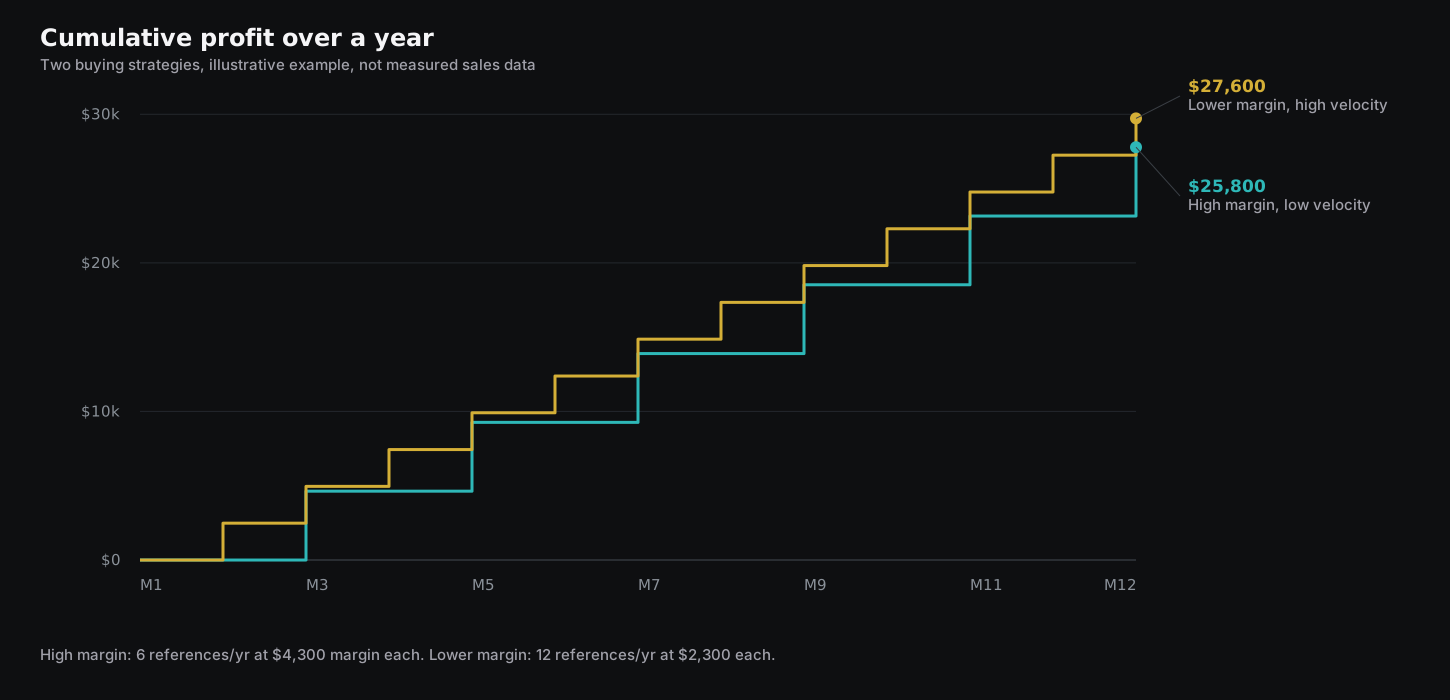
Same starting capital, and the lower-margin strategy finishes the year ahead, because it converts twice as often. That's the days-to-sell argument made visible. It doesn't make margin per reference less important. It's the reason you need both numbers: velocity decided which strategy won this particular race, and margin per reference is what told you the race was worth running at $2,300 a watch instead of $1,000.
The Restocking Decision This Number Should Drive
Here's where the number actually pays for itself. Every dealer eventually asks: I have capital freed up, what do I buy next? Most answer that question with instinct, or with whatever reference is top of mind, or with brand prestige.
Margin per reference answers it with evidence. If Reference B in the table above is the pattern, not the exception, that's a signal to buy more of that reference and fewer of Reference A's type, regardless of how either one feels to sell. The dealers who compound their margin over time aren't the ones with the best gut. They're the ones who let the number decide.
Why Most Dealers Never See It This Way
The reason this stays blended isn't lack of interest. It's that reconciling cost basis against sale price, per watch, and then checking that against the channel's actual fee schedule, is real work when it's done by hand. Most tools show you total profit for the period. Almost none show you which specific reference earned it.
So the number that should decide the next buy stays buried in a spreadsheet nobody has time to rebuild watch by watch, and the decision gets made on feel instead.
Putting Margin Where You Can See It
That's exactly why Vericog computes gross margin on every watch automatically, sale or asking price against cost basis, and rolls it up by brand right on the dashboard, next to capital tied up and days-to-sell. And when you price a watch on eBay or Chrono24, net proceeds after that channel's actual fees show next to the asking price, so gross and net are never confused for each other.
The point isn't a prettier report. It's that the number telling you what to buy again should never require rebuilding a spreadsheet to see.
The Takeaway
Sale price tells you what came in. Margin per reference tells you what you kept, watch by watch, after what you paid and after what the channel took. Blended across your whole inventory, it's meaningless. Per reference, it's the number that should decide your next purchase.
Know your margin, watch by watch. Then buy more of what actually pays.
Curious what your margin per reference actually looks like once fees are in? Book a demo and we'll import your inventory and show you.